
January 20, 2026
How to create an effective content brief

A content brief is the single most important document for scaling SEO production because it bridges the gap between high-level strategy and the final draft. Without a brief, you are essentially asking a writer to guess your business goals, which inevitably leads to bloated revision cycles and misaligned content that fails to convert.

Why a structured brief is non-negotiable
The primary goal of a brief is to eliminate ambiguity. I have seen countless marketing teams waste thousands of dollars on “thought leadership” content that never ranks because the writer wasn’t given clear SEO guardrails. At ContentGecko, we believe that most thought-leadership content is a distraction for SEO; if you want traffic, you need a document that prioritizes intent and structure over fluff. Implementing a standardized content production workflow that includes a detailed brief can reduce revision cycles by as much as 30% by setting expectations before the first word is typed.
I often hear managers argue that detailed briefs stifle creativity. In my experience, the opposite is true. When a writer knows exactly which keywords to hit and which internal pages to link to, they can focus their creative energy on the narrative and subject matter expertise rather than worrying about whether the technical structure is correct. A good brief isn’t a cage; it’s a blueprint that allows the writer to build faster and with more confidence.
Essential components of a high-performing brief
A brief shouldn’t be a 10-page manifesto, but it must cover the “big four” areas: administrative data, brand voice, SEO requirements, and the structural outline. Every brief needs a hard deadline, a target word count, and a clear definition of the target audience. For WooCommerce stores, this often means specifying whether the reader is a “window shopper” or a customer ready to commit to a purchase. You should always link to your content quality assurance guidelines within the brief so the writer understands your brand’s non-negotiables from the start.
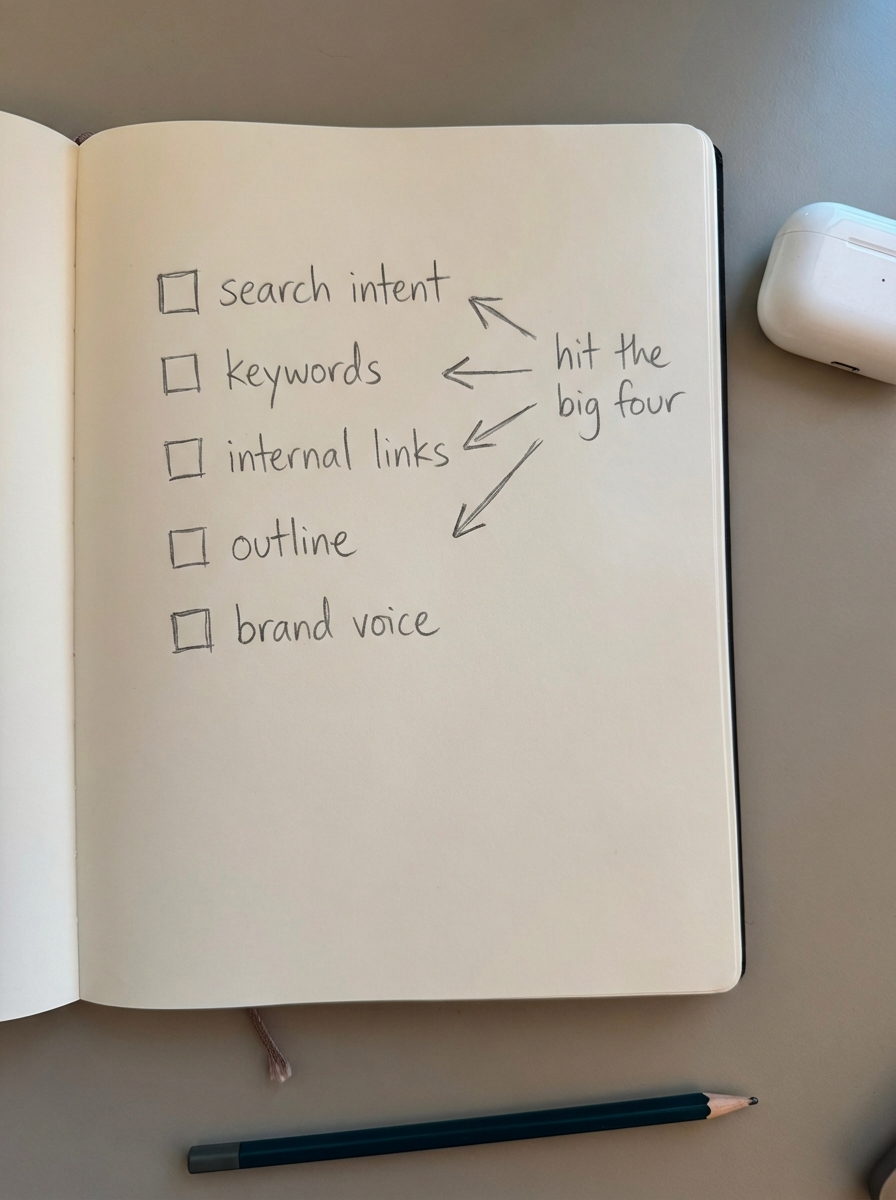
Search intent is the heartbeat of the brief. You must define the primary keyword and its specific search intent, whether that is informational, navigational, or transactional. If the intent is misaligned, the content will perform poorly regardless of how well it is written. Your brief should include:
- The primary target keyword and a list of secondary, semantically related terms.
- Specific internal links to category or product pages to build topical authority.
- High-authority external links to support factual claims.
- A structural wireframe using H2 and H3 headers.
The structural outline is where the on-page SEO process really takes shape. Don’t just give the writer a title and hope for the best. Provide the header hierarchy to ensure the logic flows correctly. If you have already performed keyword clustering to identify related terms, use those clusters to dictate the subheadings. This ensures the article covers the topic comprehensively enough to satisfy both users and search engines.
WooCommerce-specific briefing requirements
Briefing for an ecommerce store requires a different lens than briefing for a standard B2B SaaS blog. In the world of WooCommerce, your blog should serve as a functional bridge to your product catalog. One of our contrarian beliefs at ContentGecko is that it is way more important to optimize category pages than individual product pages. Your briefs should explicitly instruct writers to link back to the most relevant category pages using descriptive anchor text, as these pages are your primary engines for organic growth.
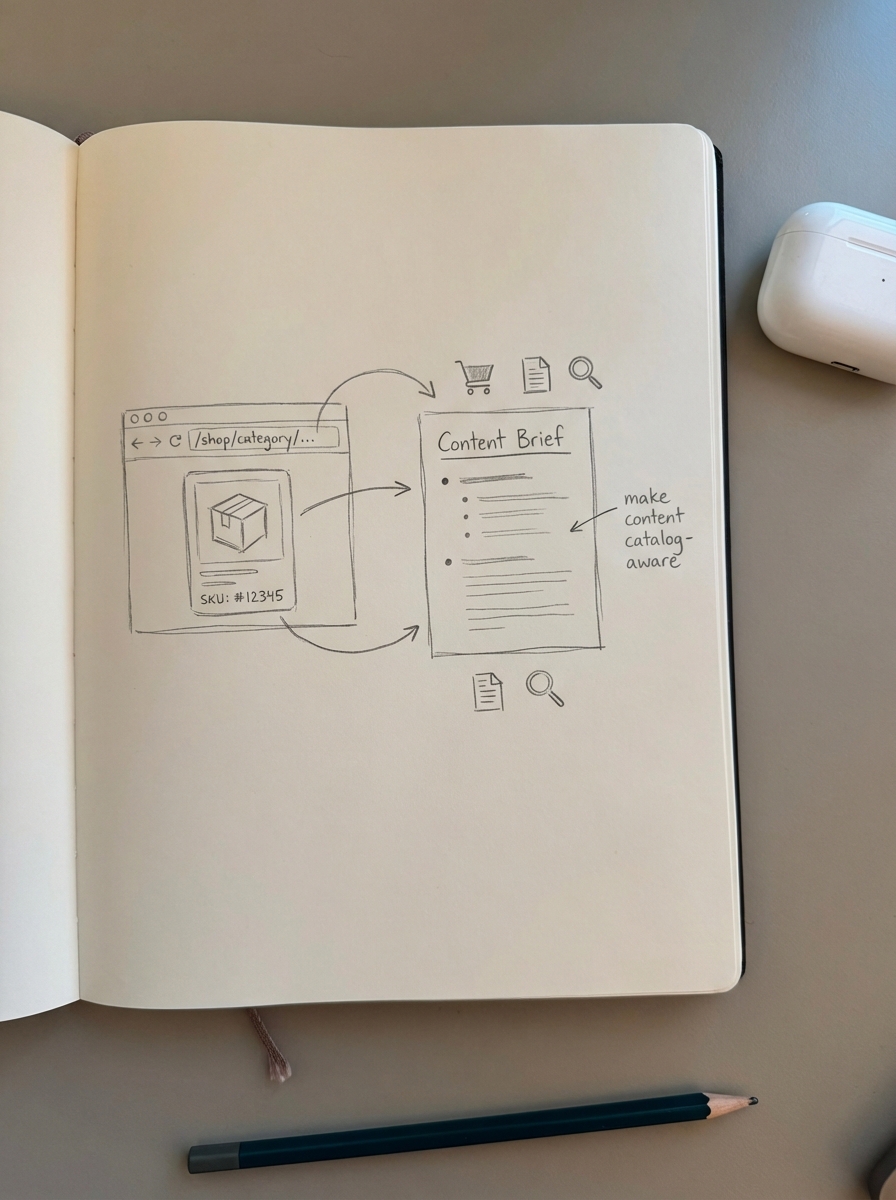
Technical details cannot be left to chance. For a WooCommerce store to maintain its SEO health, the content must be “catalog-aware.” This means your briefs need to include specific instructions for the WooCommerce URL structure, typically following a clean hierarchy like /shop/category/post-name/.
You should also standardize WooCommerce image SEO within your briefs. I recommend requiring hyphenated filenames and alt text that remains under 125 characters. Furthermore, if an article references specific SKUs, the brief should remind the editor or publisher to implement Product or FAQ schema to capture featured snippets and improve visibility in the SERPs.
How ContentGecko automates the briefing process
Manual briefing is a major production bottleneck that drains your marketing team’s time. If it takes you two hours to write a brief for an article that only takes two hours to write, your ROI is effectively cut in half. At ContentGecko, we iterate on content like a product: we launch an MVP quickly and then improve it based on performance.
Our platform automates the research and briefing phase to keep your production engine moving at scale. The free AI SEO content writer analyzes the current SERP to determine the optimal structure based on what is already ranking. We also use advanced tools like Perplexity and DeepSeek R1 to pull real-world data and citations, ensuring your content is grounded in fact rather than AI hallucinations.
By using our WordPress connector plugin, the system syncs directly with your WooCommerce catalog. This means your content plans are always aware of actual product data, stock status, and pricing. This level of automation allows you to scale content production with automation without sacrificing the brand control or technical precision that your store requires to compete.
TL;DR
An effective content brief aligns writers with search intent, brand voice, and technical SEO requirements to ensure content actually converts. For WooCommerce stores, briefs must prioritize internal links to category pages and include catalog-synced technical data like SKU details and proper URL structures. To scale your output without ballooning your headcount, transition from manual briefing to SEO content automation to generate data-backed outlines in seconds.