
January 20, 2026
Search intent classification for WooCommerce SEO

Search intent is the fundamental metric for modern SEO because Google ranks pages based on how effectively they satisfy a user’s specific goal, not simply the keywords they contain. If you map the wrong intent to a page – such as attempting to rank a transactional product page for a high-level “how-to” query – you will struggle to reach the top 10 regardless of your backlink profile or technical optimization. In my experience, ecommerce intent classification is the primary difference between a high-bounce keyword dump and a high-converting content funnel. Research suggests that targeting long tail keywords with precise intent can yield conversion rates as high as 25%, while broader terms often hover around 12%.
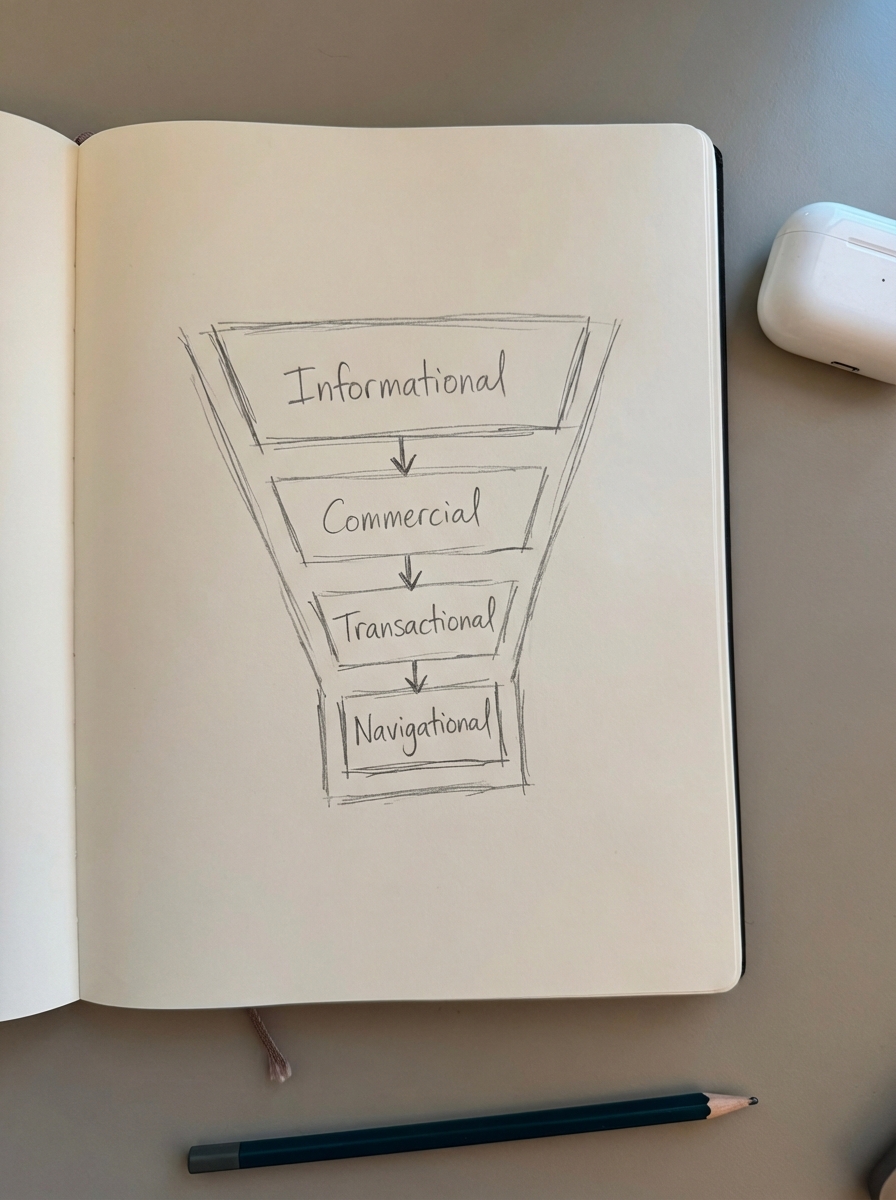
The four types of search intent in ecommerce
To build a sophisticated WooCommerce strategy, you must move beyond raw keyword lists and segment your data into four primary buckets. Each bucket requires a different content format and placement within your site architecture.
Starting at the top of the funnel, informational intent includes users looking for answers or identifying a problem. They are not yet ready to purchase but are researching solutions. Examples include queries like “how to clean suede boots” or “benefits of ergonomic chairs.” For WooCommerce stores, these queries belong on your blog. We use this content to build topical authority and guide users toward transactional pages through strategic WooCommerce internal linking.
Commercial intent represents users who know what they want to buy but are still comparing specific options. They are actively seeking lists, reviews, and “best of” guides. Phrases such as “best trail running shoes for wide feet” or “AeroPress vs French press” fall into this category. These are your most valuable blog assets, often taking the form of buyer guides and listicles. They allow you to position your specific products as the solution while the user remains in research mode.
Transactional intent is the “buy now” stage. The user has identified a product or category and is prepared to complete a purchase. Queries like “buy organic coffee beans” or “men’s blue linen shirt” are purely transactional. These must map to your category or product pages. I have found that it is far more important to optimize your category pages for these terms than your individual product pages, as categories capture a broader range of transactional demand.
Navigational intent occurs when a user is looking for a specific brand or destination, such as “ContentGecko login” or “Nike return policy.” Your goal here is to ensure your brand name, help pages, and account login areas are clearly indexed and easy to find.
Why intent mapping drives category-first SEO
Many ecommerce sites suffer from a bloated structure with duplicate or competing pages, often because the SEO lead fails to distinguish between commercial and transactional intent. I frequently see stores create a blog post titled “Our Best Blue Sneakers” that competes directly with their “Blue Sneakers” category page. This creates content cannibalization and wastes your crawl budget.
A more effective approach is a category-first SEO strategy. Use tools like our Free Ecommerce Category Page Optimizer to ensure your category names are specific enough to capture transactional intent without overlapping with your informational blog content. If you handle the technical basics of store SEO correctly, the remaining growth opportunity lies almost entirely in producing a catalog-aware blog that targets the informational and commercial queries your category pages cannot satisfy.
Turning keyword dumps into actionable segments
When you are dealing with a list of thousands of keywords, manual classification becomes an impossible task. You need a workflow that groups terms based on how search engines actually interpret them. I recommend moving away from linguistic similarity and toward search result analysis.
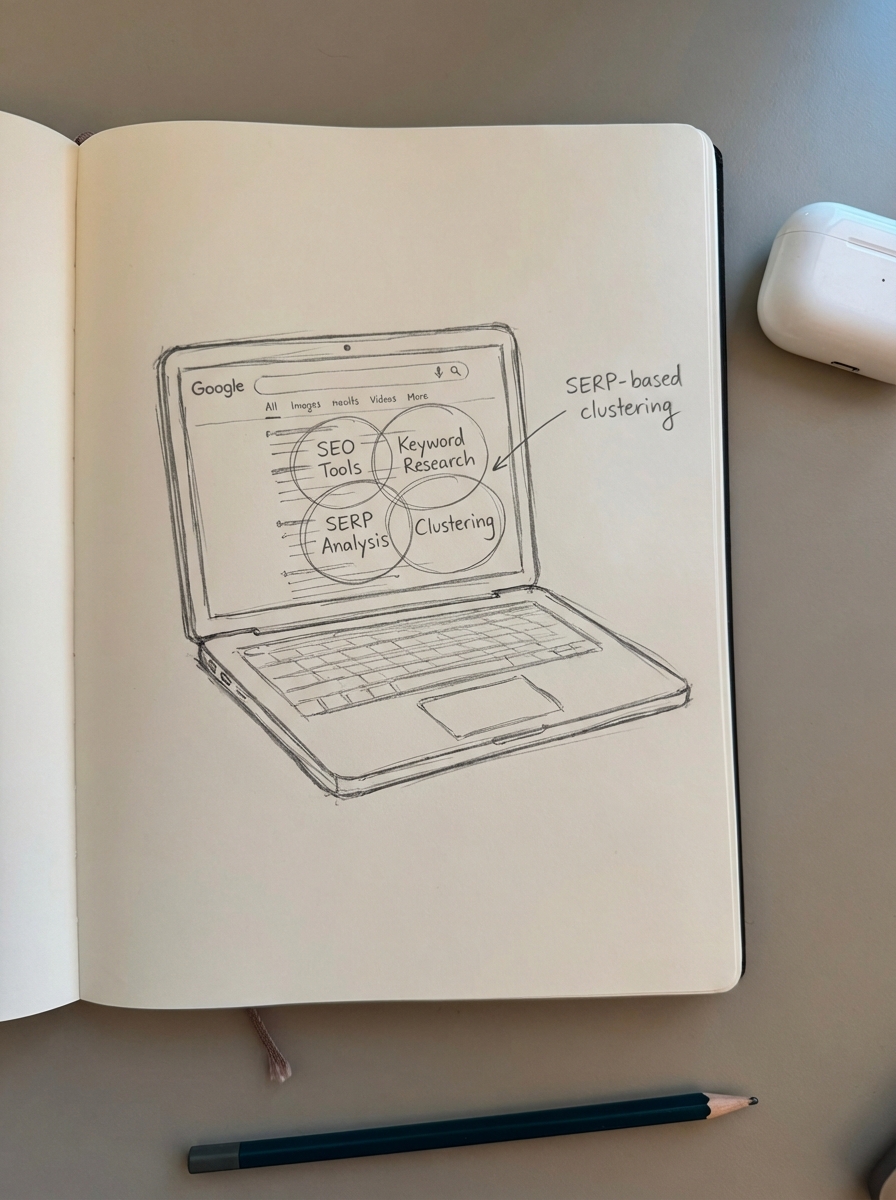
Instead of grouping keywords by how they look, we use SERP-based clustering. This method analyzes the actual search results; if two different keywords share a significant percentage of the same URLs in the top 10 results, Google views them as having the same intent. This means they should be targeted by a single page rather than separate content pieces. You can automate this process using our free SERP-keyword clustering tool, which identifies when multiple keywords belong to the same cluster. This prevents you from creating redundant content and ensures your keyword research workflow stays efficient.
In some cases, you will encounter “mixed intent” queries where the search results display both a category page and an informational guide in the top five spots. This indicates that Google is unsure of the user’s ultimate goal. In these instances, I look at the dominant page type. If 70% of the results are informational guides, you should target that keyword with a blog post, even if the term seems transactional on the surface.
Scaling intent-based content for large catalogs
For WooCommerce stores managing over 1,000 SKUs, manual intent classification is a recipe for strategic failure. Your product catalog is dynamic; prices fluctuate, items go out of stock, and categories are constantly updated. Managing this manually leads to broken links and outdated advice.
To scale effectively, you need an automated system that analyzes your product attributes to identify long-tail gaps and classifies those gaps into informational or commercial WooCommerce topic clusters. The goal is to produce content that stays in sync with your actual inventory levels and pricing.
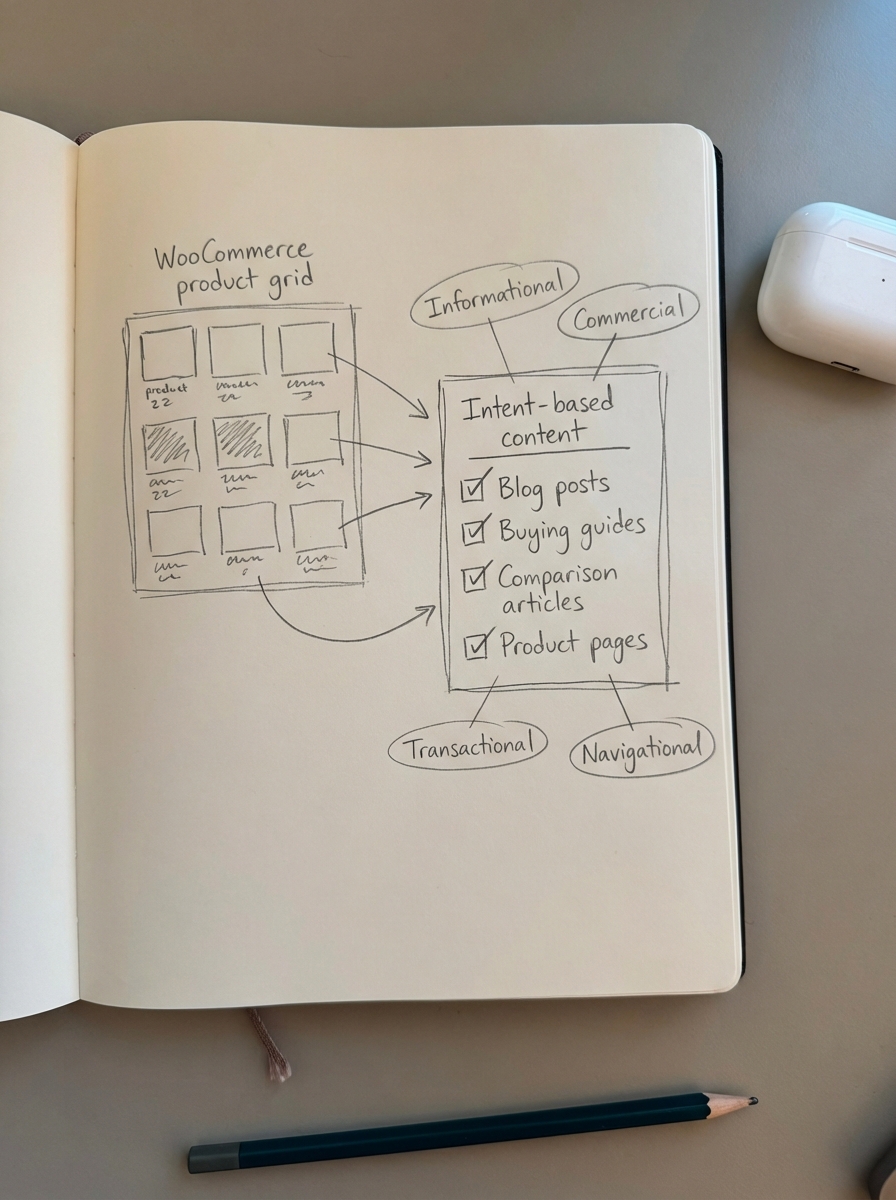
At ContentGecko, we focus on this exact automation. We sync directly with your WooCommerce catalog to plan and write content that matches search intent. This ensures that your store is not just attracting random organic traffic, but capturing the high-intent segments that lead to sales. Understanding what is keyword clustering and how it applies to a live product catalog is the first step toward moving away from useless third-party search volume data and toward actual revenue-driving SEO.
TL;DR
- Search intent classification groups keywords into Informational, Commercial, Transactional, and Navigational buckets to ensure they map to the correct page types.
- Prioritize category pages for transactional intent and use a catalog-aware blog for informational and commercial queries.
- Avoid content cannibalization by ensuring your blog does not compete with your category pages for the same transactional terms.
- Use SERP-based clustering rather than linguistic similarity to group keywords based on how Google actually ranks them.
- Automation is essential for stores with large catalogs to keep content synchronized with inventory, pricing, and stock status.
- Focus on specific, high-intent keywords which typically convert at double the rate of broad, high-volume terms.