


SaaS content writing is a product feature that bridges the gap between a technical problem and your software solution. Unlike generic content marketing designed to entertain, SaaS writing must function as the “connective tissue” that moves a prospect from initial awareness to product adoption.
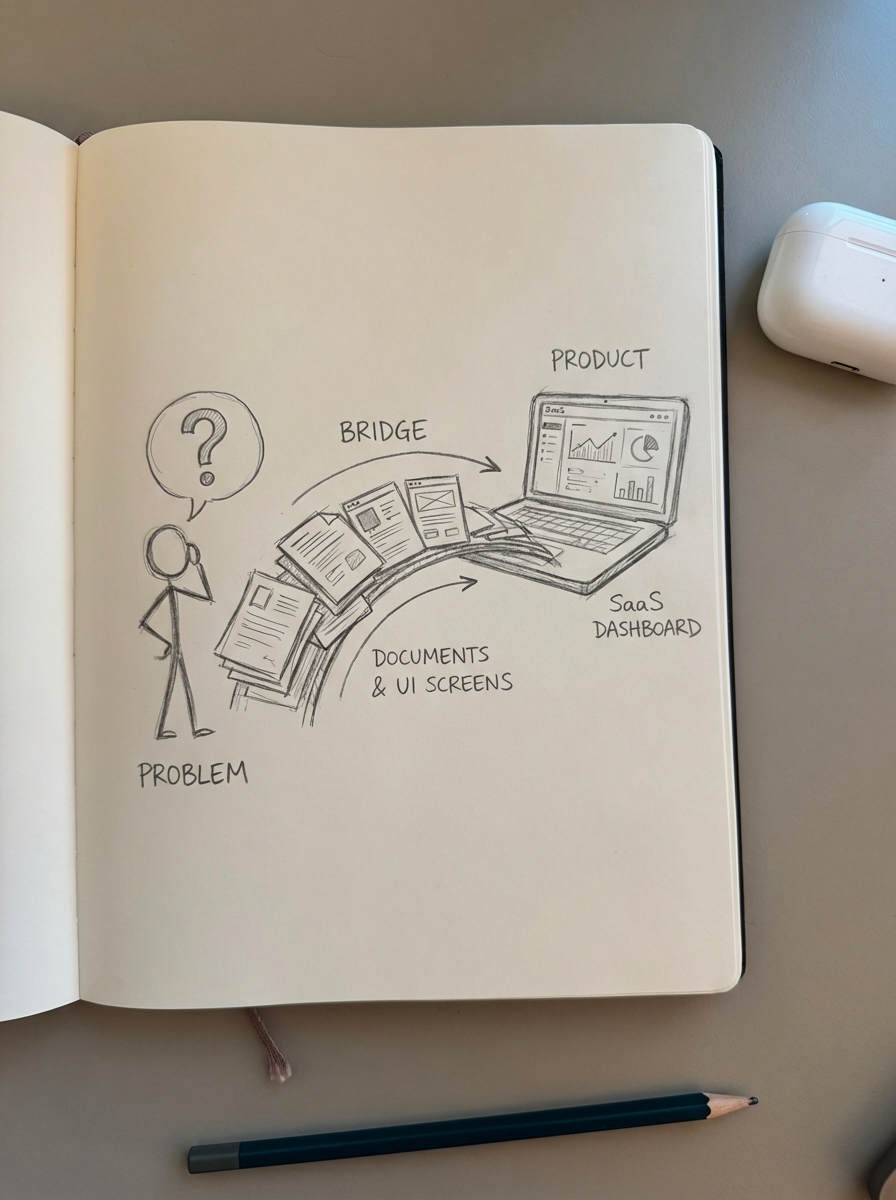
Why SaaS content writing is fundamentally different
Most generic content marketing is designed to inform at a surface level. In the SaaS world, if a reader finishes your article and doesn’t know how to solve their specific technical problem – preferably using your tool – the content has failed its primary objective. We view our blog as an extension of the product itself.
The stakes are significantly higher because the B2B SaaS buyer journey is notoriously complex. External research indicates that closing a single B2B SaaS deal often requires roughly 140 touchpoints and 600 impressions. Your writing cannot afford to be fluffy; it must provide high-utility value at every interaction point to sustain interest over a five-month sales cycle.
I have seen many founders make the mistake of hiring generalist writers who treat technical topics like lifestyle blogs. This is a fast track to high bounce rates. SaaS audiences, which include developers, marketers, and HR leads, possess a refined “BS detector.” They expect jargon, documentation-style clarity, and a clear demonstration of the product in action.
The product-led strategy beyond third-party data
I will be blunt about our approach to strategy: third-party keyword databases are often useless for innovative SaaS companies. These databases are frequently too small or outdated to reflect the actual language your customers use in Slack communities, Discord servers, or support tickets. Relying solely on them means you are always three steps behind the market.
Instead of chasing high-volume vanity keywords, we focus our strategy on high-intent utility. This involves a few core shifts in how we plan our production:
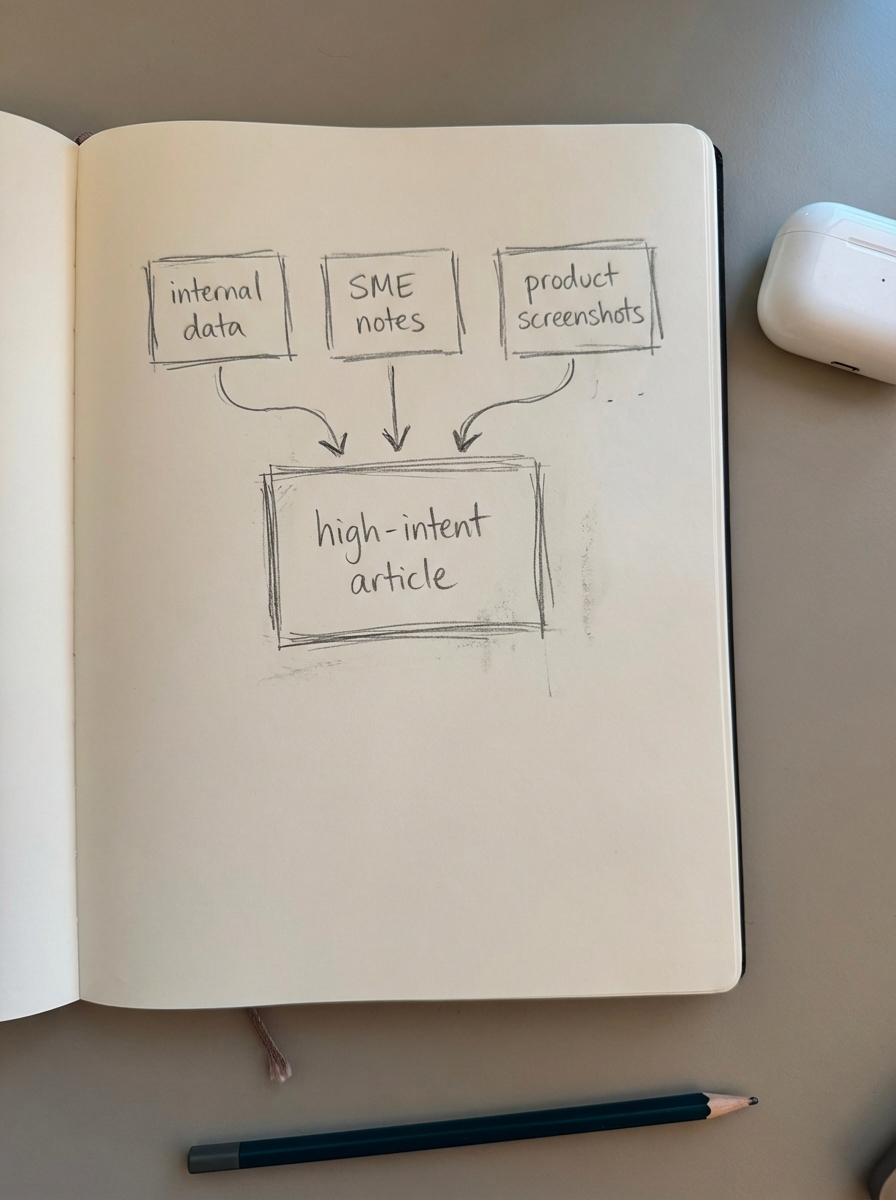
- Focus on product-led content where you show rather than just tell. If I am writing about reducing churn, the article should include screenshots of a churn dashboard and a walkthrough of setting up automated win-back emails.
- Engage in internal data mining by using your CRM and sales call transcripts. This allows you to capture the exact phrases prospects use, surfacing high-intent keyword opportunities that traditional SEO tools miss entirely.
- Adopt an MVP approach to content. We don’t believe in spending weeks perfecting a single “thought leadership” piece that might never rank. We launch an AI-assisted MVP, monitor the performance, and if it starts gaining traffic, we iterate on the content just as we would a software feature.
Tone and structure for technical audiences
Your tone should mirror that of a “Senior Peer.” You are not teaching a beginner; you are helping an expert do their job faster and more effectively. This requires a level of directness that generic marketing lacks.
I always recommend skipping the “What is…” introduction. If I am reading an article about PostgreSQL indexing, I already know what a database is. Jumping straight to the implementation respects the reader’s time and establishes immediate authority.
We also advocate for first-person authority. Use “I” and “We” to share anecdotes about when a feature failed or how a specific workflow was discovered through trial and error. This is crucial because B2B buyers increasingly trust personal brands and internal experts over faceless corporate voices.
To structure these pieces effectively, we use a specific framework:
- Identify the technical bottleneck or problem clearly and early.
- Agitate the problem by explaining why current manual workarounds are costing the team time or money.
- Offer a framework for a solution that provides immediate value regardless of tool choice.
- Demonstrate how your product automates that specific framework to save the reader effort.
Scaling the workflow with AI and subject matter experts
The primary bottleneck in SaaS content production is the Subject Matter Expert (SME) review. Writers often lack the deep product knowledge required for high-level pieces, and your best engineers or product managers rarely have the time to write 2,000 words.
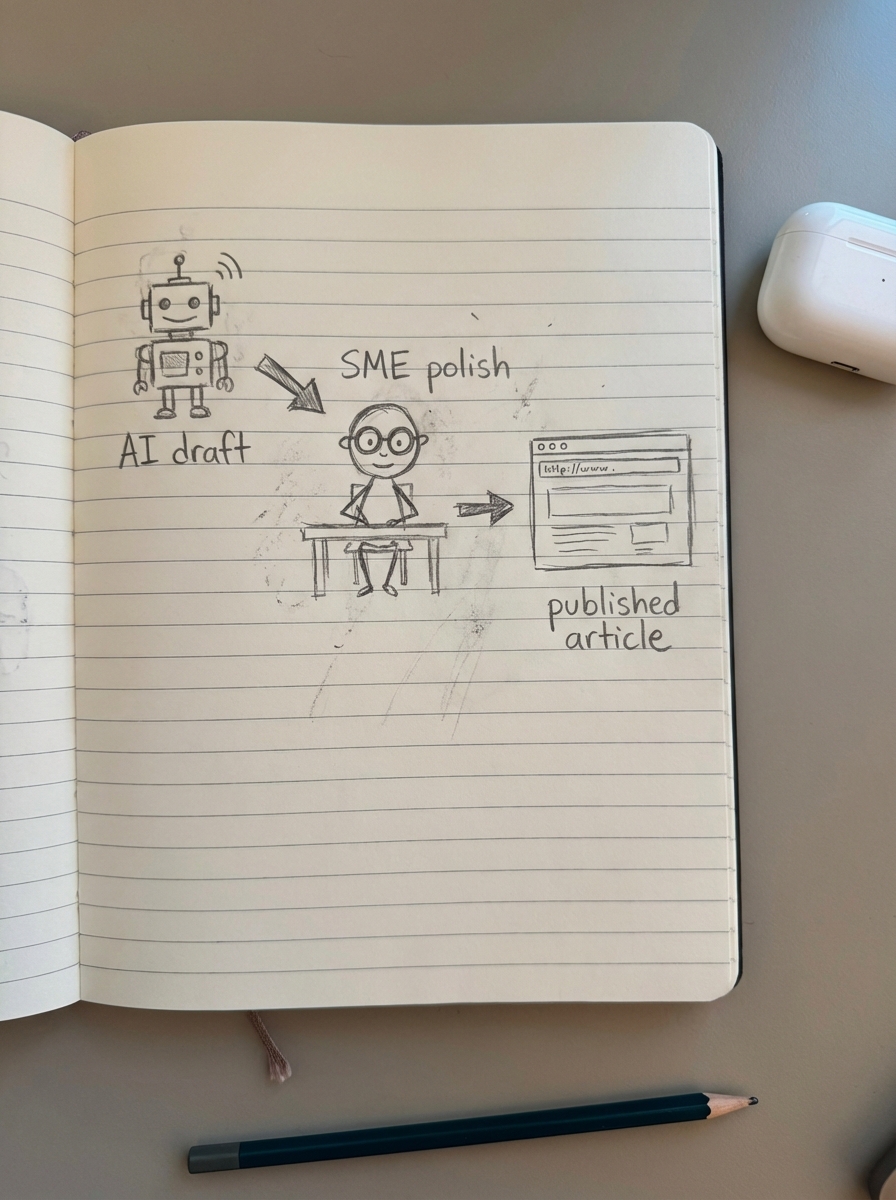
We solve this through a hybrid workflow that leverages automation without sacrificing the technical edge. The process begins by using AI to group keywords by intent based on SERP similarity, which prevents internal competition between pages.
Once the strategy is set, we follow a structured path:
- Create a detailed content brief that explicitly lists the product features and technical requirements to mention.
- Use AI-powered writing tools like our free AI SEO content writer to handle the initial structure, research, and drafting.
- Apply the “Expert Polish” by having an SME spend twenty minutes adding specific anecdotes, code snippets, or unique product screenshots to the draft.
- Conduct a final content quality assurance process to ensure brand consistency and technical accuracy before publishing.
Examples of high-converting SaaS content
Product-focused content should prioritize utility over aesthetics. In my experience, the highest-converting assets are those that directly address a buyer’s comparison or implementation needs.
Comparison pages are a prime example. “Your Product vs. Competitor X” pages are high-intent and capture users at the point of decision. We find that being honest about where your tool loses and where it wins builds more trust than a one-sided marketing pitch.
How-to guides with downloadable templates are another heavy hitter. Don’t just explain a strategy; provide a Google Sheet or a JSON file the reader can use immediately. This transforms your blog post into a utility.
Finally, consider case study teardowns. Research suggests that 70% of B2B marketers believe case studies are the best format for converting leads. Instead of a standard PDF, we write blog posts that “tear down” exactly how a client achieved a specific ROI using our API, making the results feel attainable for the reader. To stay competitive, many teams are now scaling content production with automation to ensure these types of high-value assets are published consistently.
TL;DR
Effective SaaS content writing prioritizes utility and product integration over generic SEO metrics. By using internal sales data instead of relying solely on third-party tools, adopting a first-person expert voice, and iterating on articles like software MVPs, you can influence the modern B2B buyer. Combining AI-driven production with a final subject matter expert polish allows you to maintain the high volume and technical quality required to drive organic growth.