


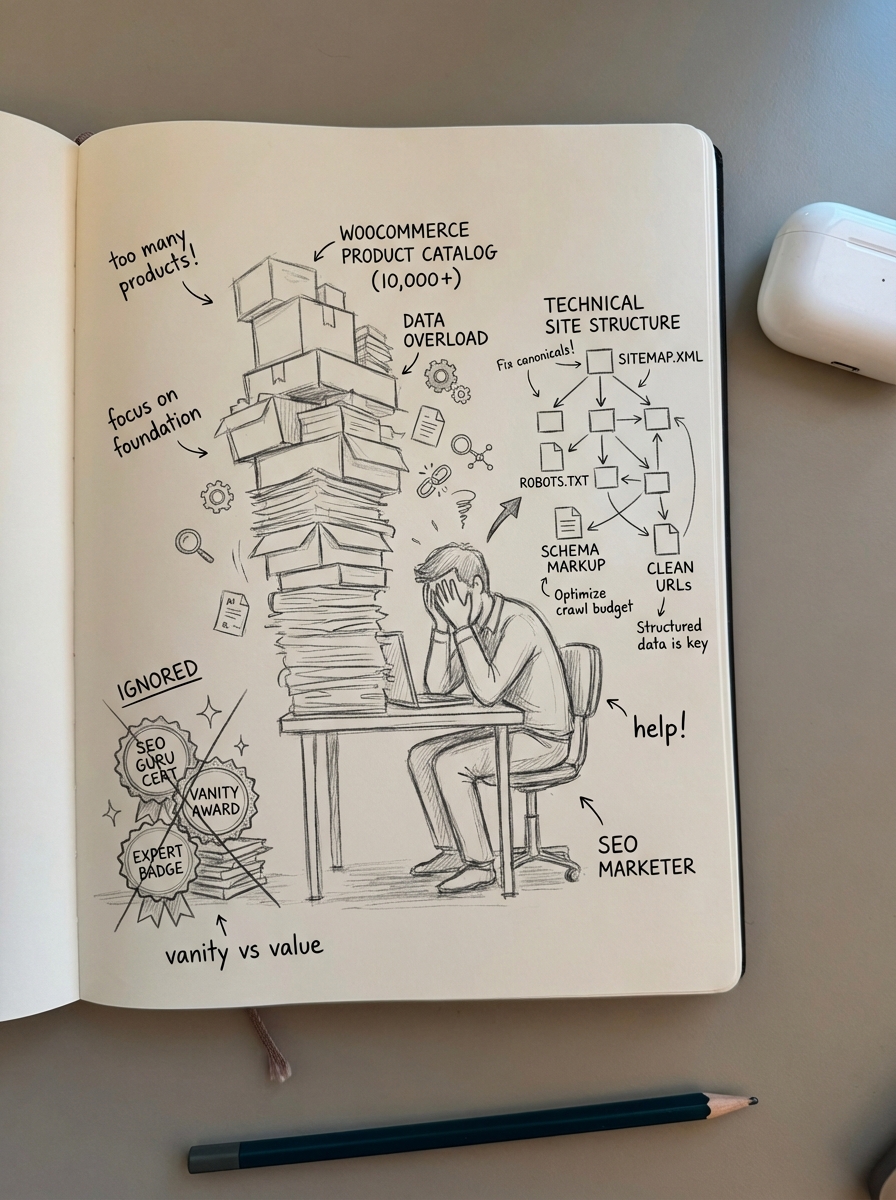
Most SEO certifications are vanity badges that won’t help you scale a WooCommerce store because they prioritize generic theory over the high-stakes reality of managing a massive product catalog. If a course spends three modules explaining how to manually craft a meta description – a task that modern SEO writing processes now largely automate or leave to Google’s discretion – it is stealing time you should be using to fix your faceted navigation or category taxonomy. For ecommerce SEO leads, the goal isn’t just “learning SEO”; it is acquiring the specific technical and strategic frameworks required to turn organic search traffic into moved SKUs.
Why most SEO certifications fail WooCommerce stores
The fundamental problem with generic SEO training is that it treats a static 50-page B2B site the same as a 10,000-SKU WooCommerce store. In my experience, applying “standard” blog-first SEO to a large catalog without a specific ecommerce framework leads to a bloated site architecture and zero meaningful revenue growth. Most certifications ignore the most critical levers for online retailers.
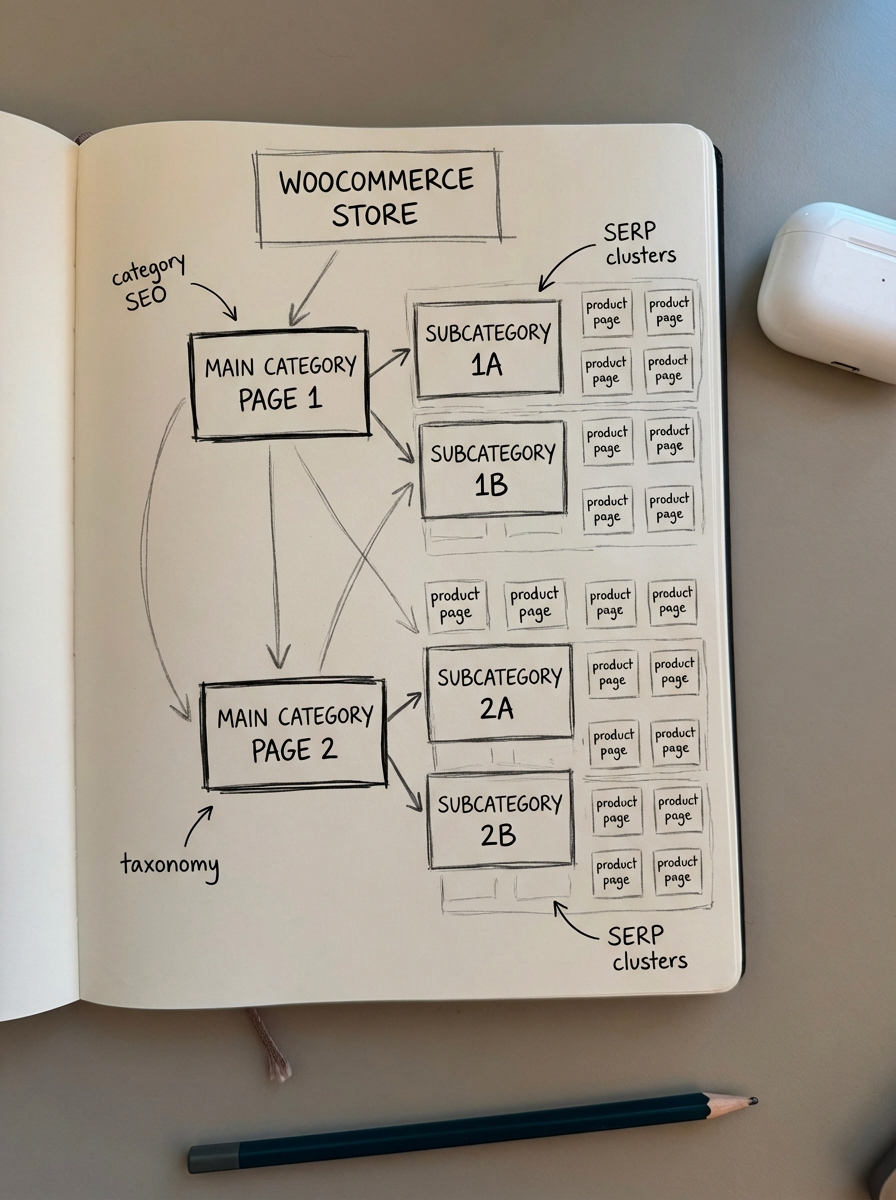
- Category Page Dominance: In the ecommerce world, optimizing category pages is significantly more impactful than focusing on individual product pages. You need training that focuses on category name specificity and taxonomy design rather than just product-level keyword density.
- Technical Scalability: Managing duplicate content and broken hreflang setups are the most frequent technical mistakes I encounter. Beginner guides rarely cover how to handle the crawl budget waste associated with complex faceted navigation.
- The MVP Approach: You cannot afford to spend three weeks polishing a single informational article. Practical training should teach you how to iterate content like product: launch an AI-generated MVP quickly, monitor its performance, and only invest in manual refinement once it shows ranking traction.
Top SEO content training programs for revenue-focused leads
If you are looking for practical execution skills rather than a LinkedIn badge, there are only a handful of programs worth the investment for an ecommerce professional.
CXL offers a focused track on Ecommerce SEO Research and Strategy that skips the fluff. Their training is built for practitioners who need to justify their existence through ROI metrics rather than vanity rankings. For those of us managing WooCommerce stores, their modules on technical site structure and conversion-centric on-page optimization are invaluable. They teach you how to build a site that converts clicks into customers.
Ahrefs Academy provides Practical SEO training that, while tool-focused, teaches you the vital skill of ignoring misleading third-party data. I have found their approach to advanced keyword research particularly useful for identifying competitor gaps that a standard WooCommerce store can exploit. It moves beyond raw volume to look at actual traffic potential.
LearningSEO.io, curated by Aleyda Solis, is perhaps the most comprehensive roadmap for technical SEO. Aleyda is a powerhouse in the industry, and her specific guidance for ecommerce migrations and international targeting is essential for anyone managing large, multi-regional catalogs. She also addresses the “hang time” of SEO traffic – the delay between optimization and results – which is critical for accurate ROI forecasting.
Skills that actually move the needle
When evaluating any potential course, you should look for specific modules that address the complexity of an automated catalog. If the curriculum does not cover these areas, it is likely too basic for a senior lead.
SERP-based keyword clustering
You must stop using tools or methods that group keywords based purely on “semantic meaning.” This approach is too slow and often misses the mark on actual intent. I recommend training that focuses on keyword clustering based on SERP overlap. If two different queries share 70% or more of the same search results, they belong on the same page. This prevents the content cannibalization that kills the rankings of many ecommerce sites. You can experiment with this logic yourself using a free keyword clustering tool to see how intent dictates page structure.
Intent mapping for WooCommerce
A sophisticated SEO lead understands that “running shoes” and “how to clean running shoes” require entirely different page types. Any training worth its salt must teach you how to map queries to specific WooCommerce page types, ensuring transactional traffic lands on category or product pages while informational traffic hits the blog. Sending a shopper ready to buy directly into a 3,000-word essay is a fast way to tank your conversion rate.
Automating the orchestration
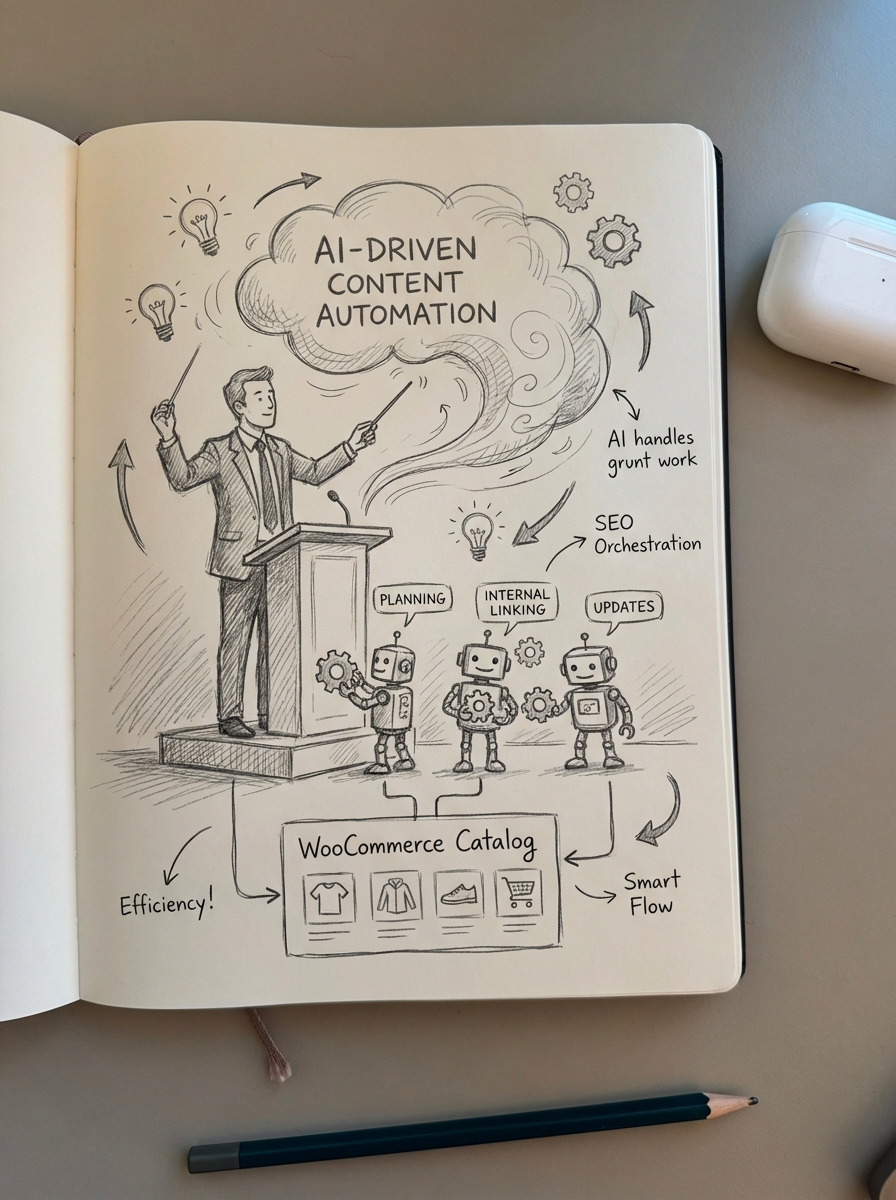
The future of ecommerce SEO is not manual writing; it is orchestration. The most successful marketers I know are those who use AI to handle the heavy lifting of content execution. Instead of managing a massive, expensive team of writers, they use a platform like ContentGecko to automate content planning synced directly to their product catalog. This shift allows the lead to focus on high-level strategy while the AI manages internal linking and ensures content stays updated as SKUs change.
Identifying vanity training
Be wary of any certification that focuses heavily on specific “SEO writing tools” like Yoast or SurferSEO. These tools operate on gamification – they might make your “score” turn green, but that has very little impact on whether you actually rank or generate revenue. Real SEO training focuses on the underlying physics of search.
- Topical Authority: You need to learn how to build topic clusters that prove to Google you own a specific niche, rather than just ranking for isolated terms.
- Data Accuracy: Prioritize courses that teach you to use GSC metrics and dashboards instead of relying on small, often inaccurate third-party databases.
- Content QA: You must implement a systematic quality assurance process to ensure every piece of content published at scale aligns with your brand voice and revenue goals.
TL;DR
Ignore the “Ultimate SEO Guide” certifications and generalist badges. If you are running a WooCommerce store, prioritize specialized training from CXL or Aleyda Solis that covers ecommerce taxonomy, SERP-based clustering, and technical scalability. Focus on skills that allow you to automate the repetitive parts of SEO so you can spend your time on the highest-ROI opportunity: building a great blog that actually supports and elevates your product categories.