
January 20, 2026
Best keyword research tools for SEO

Most keyword research tools fail ecommerce stores because they rely on aggregated third-party data that misses the granular, high-intent product queries that actually drive revenue. While software like Ahrefs and Semrush are essential for competitive intelligence, their search volume estimates are often off by orders of magnitude, leading WooCommerce managers to ignore “zero volume” keywords that could be their biggest earners.
Why third-party keyword data is fundamentally limited
If you compare the search volume for a specific niche query across different tools, the results are often laughable. For example, research shows that for a term like “reddit marketing,” estimates can range from 100,000 to 880,000 monthly searches depending on which tool you ask. This discrepancy occurs because these tools rely on clickstream data and sampled databases rather than direct access to Google’s servers.
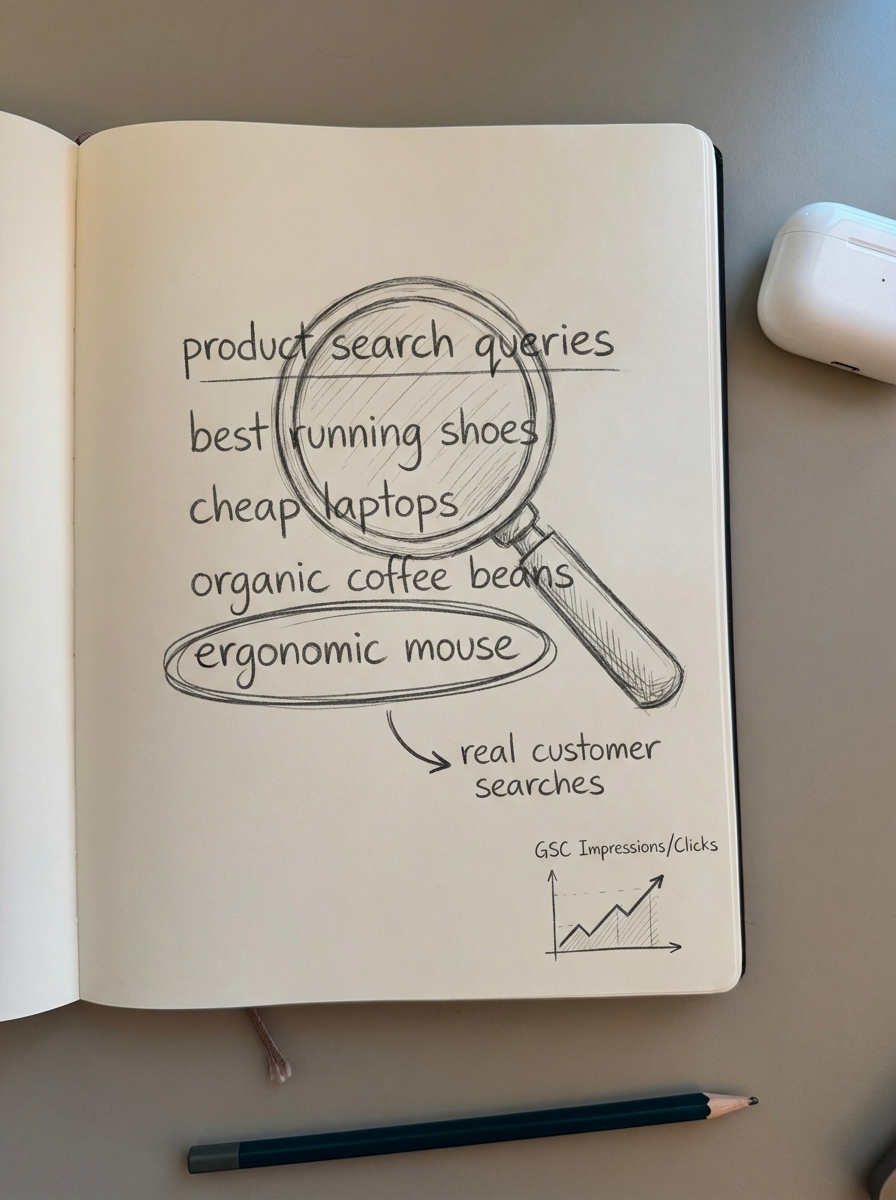
I’ve found that most third-party databases are simply too small to accurately represent the long-tail opportunities inherent in a large product catalog. We often see keyword difficulty in SEO scores that suggest a term is “easy,” only to find the SERP is dominated by giants like Amazon and Walmart. Conversely, tools often report zero volume for highly specific product variations that we know – from our own Google Search Console data – are driving steady clicks and sales.
For ecommerce, the “source of truth” is always your own data and the actual Google SERP, not a proprietary metric from a software vendor. While these tools provide a useful starting point, treating their volume estimates as gospel is a recipe for missed revenue.
Top keyword research tools for ecommerce compared
Ahrefs: The gold standard for competitor gaps
Ahrefs is my go-to tool for competitor keyword gap analysis. Their index of 40 billion keywords is massive, making it easier to see exactly which “buying guides” your competitors are using to siphon off top-of-funnel traffic. It excels in backlink analysis and provides a “Traffic Potential” metric that is often more useful than raw search volume, as it accounts for all the related terms a page might rank for.
However, Ahrefs has become increasingly restrictive with its pricing for large-scale crawling. For a WooCommerce store owner managing thousands of SKUs, the “Lite” plan’s limitations can quickly become a bottleneck. Furthermore, their data freshness can lag behind for fast-moving seasonal products or sudden market shifts.
Semrush: The all-in-one marketing suite
If you are running both organic SEO and PPC for a WooCommerce store, Semrush is the superior choice. It allows you to see the overlap between paid and organic keywords, which is vital for advanced keyword research. One of its standout features is the intent labeling, which classifies queries as Informational, Navigational, Commercial, or Transactional. This helps you quickly filter for the “buying” terms that deserve priority in your catalog.
The downside to Semrush is its cluttered UI and the sheer volume of features that many store owners will never use. If you just need to find blog topics, paying for a full-suite marketing tool might be overkill. It tracks roughly 20 billion keywords – half of what Ahrefs claims – but its integration with paid search data provides a more holistic view for growth marketers.
Google Search Console: The only source of truth

No third-party tool can compete with Google Search Console (GSC). It shows you exactly what people typed to find your specific SKUs. I recommend looking for keywords with high impressions but low click-through rates (CTR); these represent your “low-hanging fruit” where a small optimization to a title tag or meta description could yield immediate gains.
To make this data truly actionable, we use an ecommerce SEO dashboard to separate these metrics by page type. This ensures we aren’t mixing blog data with category page performance, allowing for a much clearer view of where the technical or content gaps exist.
ContentGecko: For automated clustering and execution
The biggest bottleneck in ecommerce SEO isn’t finding keywords; it’s how to group keywords so you don’t end up with content cannibalization. If you have 5,000 products, you simply cannot manually research every cluster. Our free SERP-based keyword clustering tool groups keywords based on actual Google result similarity.
If two keywords share a 70% overlap of URLs in the top 10 results, they belong on the same page. This prevents you from writing three different articles for “best waterproof boots,” “top rain boots,” and “water-resistant footwear” when Google only wants to rank one comprehensive page for all three. Moving from manual spreadsheets to automated keyword grouping saves dozens of hours in the planning phase.
The MVP content workflow: Shipping over searching
A common mistake I see growth marketers make is spending three weeks in Ahrefs and spreadsheets before writing a single word. They try to find the “perfect” keyword with a difficulty of less than 10 and a volume of over 1,000. In the current AI-disrupted landscape, this level of over-analysis is a waste of resources. I believe you should iterate content like you iterate a product.
Instead of waiting for perfect data, launch a “Minimum Viable Product” (MVP) for your content. Use an AI SEO content writer to generate a high-quality, fact-checked article based on a cluster of long-tail keywords. Once the page is live, monitor it for 30–60 days to see if it gains any impressions in GSC. If the page starts ranking on page two or three, that is the signal to invest human editorial time to polish it, add custom photography, or include expert quotes.

If a topic would genuinely benefit your users – like a “How to clean [Specific Product]” guide – you should publish it regardless of what the keyword tools say. Helpful content builds brand authority even if the search volume looks low on paper.
Moving beyond product page optimization
Most ecommerce SEOs focus entirely on product pages, but the real growth is in optimizing category pages and building a catalog-aware blog. A traditional keyword tool might tell you that “hiking boots” is too hard to rank for. However, they often miss the opportunity to create a buyer’s guide that targets “best hiking boots for wide feet” and dynamically pulls in your current in-stock inventory.
This is exactly why we built ContentGecko. Instead of manually checking search volume every month, our platform syncs with your WooCommerce catalog. It identifies keyword opportunities your products can actually rank for, writes the content, and – most importantly – updates the articles when your prices or stock levels change. This approach moves you away from “static” keyword research and into a living, breathing strategy driven by automated SEO software.
TL;DR
Don’t treat keyword tool metrics as gospel; use them as directional signals. While Ahrefs and Semrush are excellent for competitor spying, Google Search Console remains your only source of raw, accurate data. For WooCommerce stores with large catalogs, stop over-analyzing and start shipping AI-assisted “MVP” content. Use SERP-based clustering to avoid cannibalization and focus on building informational content that supports your products and adapts to your inventory changes.