
January 20, 2026
SaaS keyword research for high-intent signup growth

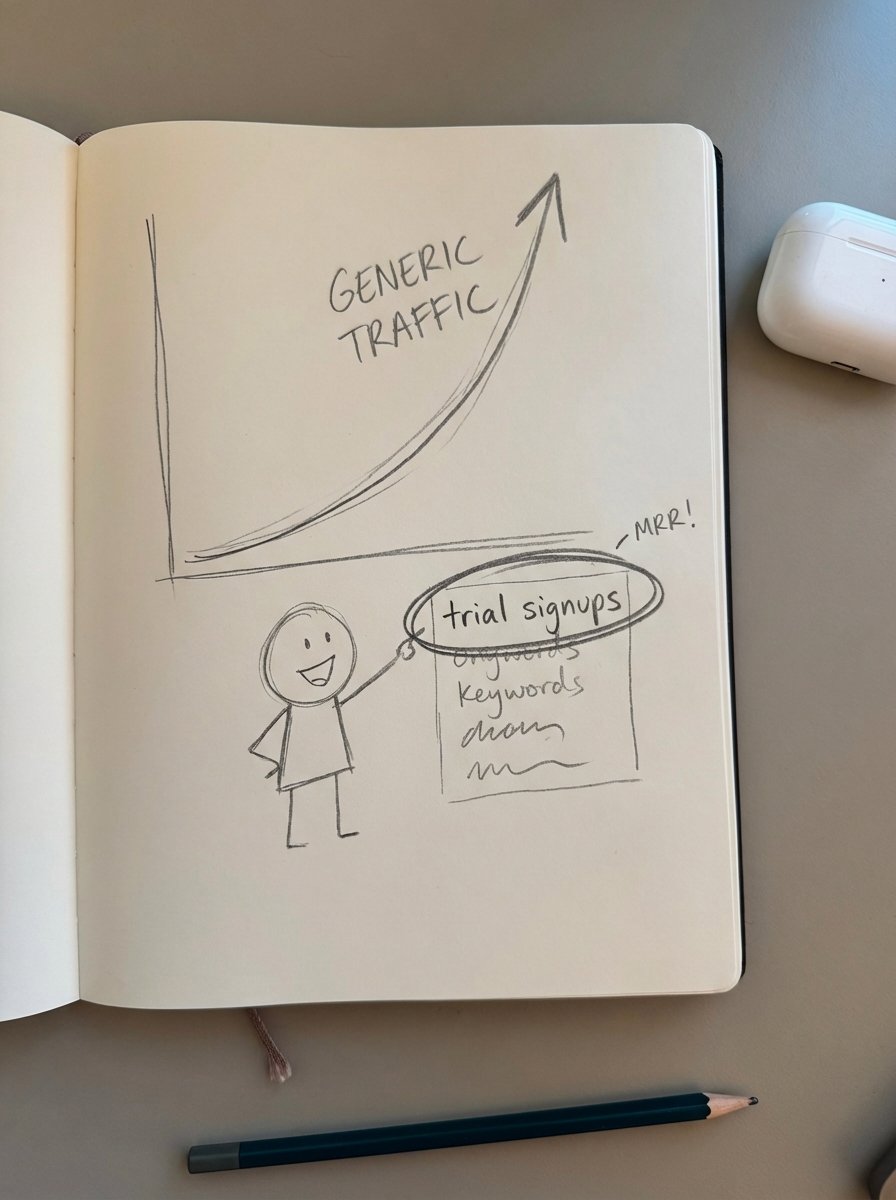
Most SaaS keyword research is a complete waste of time because it prioritizes arbitrary traffic metrics over actual signups, demos, and MRR. If you are running a SaaS-savvy brand on WooCommerce, you do not need more casual readers; you need more active subscribers. Effective keyword strategy is about identifying the specific intersection where a user’s problem meets your product’s unique solution.
Generic SEO advice tells you to find high-volume terms and build “thought leadership.” I disagree. In my experience, thought leadership rarely works for SEO because it focuses on what you want to say rather than what users are searching for. Instead, SaaS growth happens when you align your strategy with specific use cases and pain points. You need to stop chasing the broad keywords that third-party tools suggest and start looking at the queries that signal a genuine readiness to buy.
Why 3rd party keyword data is failing your SaaS
I’ve looked at enough Ahrefs and Semrush dashboards to tell you that their databases are often too small to accurately represent the high-intent, long-tail opportunities that drive B2B SaaS growth. For many niche software solutions, the most valuable keywords show “0 search volume” in these tools. This is a trap; if you only target terms with high estimated volume, you are competing in a “red ocean” against legacy players with massive backlink profiles and ignoring the nuanced problems your customers actually face.
At ContentGecko, we believe that third-party keyword data is largely useless for making high-stakes strategic decisions. These metrics are often off by a wide margin because they cannot account for the technical nuances of search intent optimization. Reliance on these tools leads to “me-too” content that fails to convert because it targets the wrong stage of the journey.
Instead of trusting a generic difficulty score, you should look at your own first-party data. I recommend using Google Search Console for keyword research to identify where you are already getting impressions for “hidden” terms. If you see a query getting impressions but no clicks, that is a direct signal from Google that a content gap exists. These are the queries your customers are actually typing, and they are far more valuable than any estimated volume metric.
Mapping the SaaS buyer journey to search intent
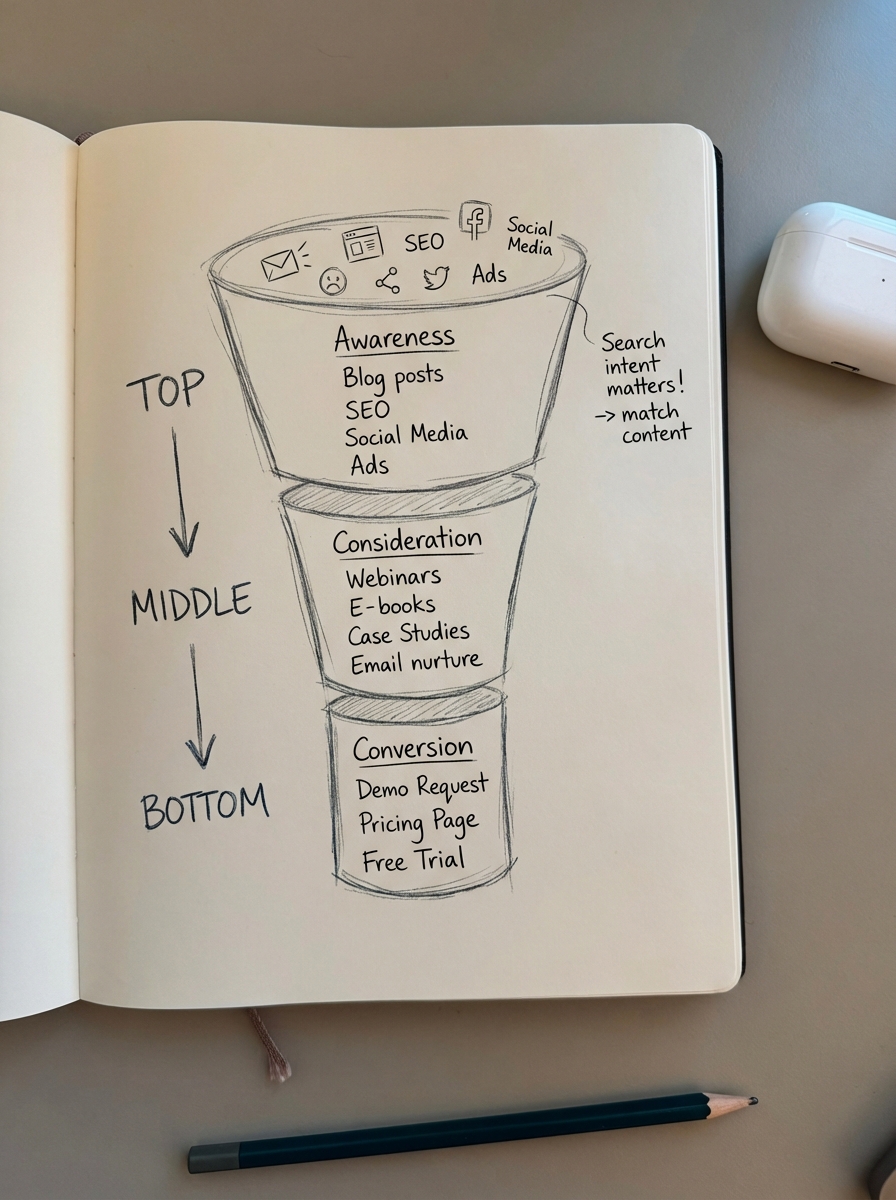
Effective SaaS keyword research requires a shift from “topics” to “jobs to be done.” You are not just looking for “marketing software”; you are looking for “how to automate monthly reporting for WooCommerce.” This shift ensures that every piece of content you produce serves a specific function in the conversion funnel.
Bottom-of-funnel high-intent keywords
These keywords are your bread and butter. They include terms like “alternatives to [competitor],” “best [category] software,” and “[category] pricing.” While the keyword difficulty in SEO for these terms is often high, the conversion rate justifies the effort. Data shows that optimizing for high-intent content can lead to a 23% increase in goal completions, as these searchers are already in the decision-making phase.
Middle-of-funnel solution-aware keywords
These searchers know they have a problem but are not yet sure which tool is the right fit. Keywords like “how to sync WooCommerce to X” or “automated invoice generation for subscriptions” are gold. They allow you to showcase your product as the natural solution within educational content. This is where strategic SaaS content writing shines by balancing technical accuracy with a clear value proposition.
Top-of-funnel problem-aware keywords
Avoid broad, generic terms at this stage. Instead, focus on specific pain points that lead a user to your software. For a WooCommerce SaaS, this might involve queries like “why is my checkout slow?” or “how to reduce churn on subscriptions.” The goal here is not to get a million hits; it is to find the specific person who will eventually have a high lifetime value as a subscriber.
Clustering keywords to build topical authority
You should not be writing individual articles for every single keyword variation. That practice leads to content cannibalization and a bloated site, which is one of the most common technical SEO mistakes. Instead, you need to group keywords into clusters to signal topical authority to search engines.
I always recommend SERP-based keyword clustering over semantic clustering. If Google shows the same set of URLs for two different keywords, it means the search engine views the intent as identical. You only need one high-quality page for that entire cluster. Semantic clustering might look good on paper, but it often misses how Google actually groups intent in the real world.
Using a free keyword clustering tool helps you identify these overlaps quickly and accurately. By targeting a single representative keyword for each cluster, you ensure your WooCommerce store remains streamlined and avoids the pitfalls of poor keyword targeting. This efficiency allows you to rank for hundreds of related terms with a single, comprehensive piece of content.
The ContentGecko approach: Catalog-synced planning
If you are running a SaaS on WooCommerce, such as a subscription service or a plugin shop, your keyword research should be directly tied to your product catalog. Traditional SEO workflows are often disconnected – you do research in a spreadsheet, write in a document, and publish manually. This disconnect leads to outdated content and missed opportunities as your product evolves.
We built ContentGecko to bridge this gap through a WordPress connector plugin that syncs with your actual product catalog. This enables AI-driven content planning that is “catalog-aware.” If you launch a new feature or update a subscription tier, our system identifies the best keyword clusters to support that specific offering. We treat SEO content like a product feature: we ship an MVP, validate it with real data, and then optimize.
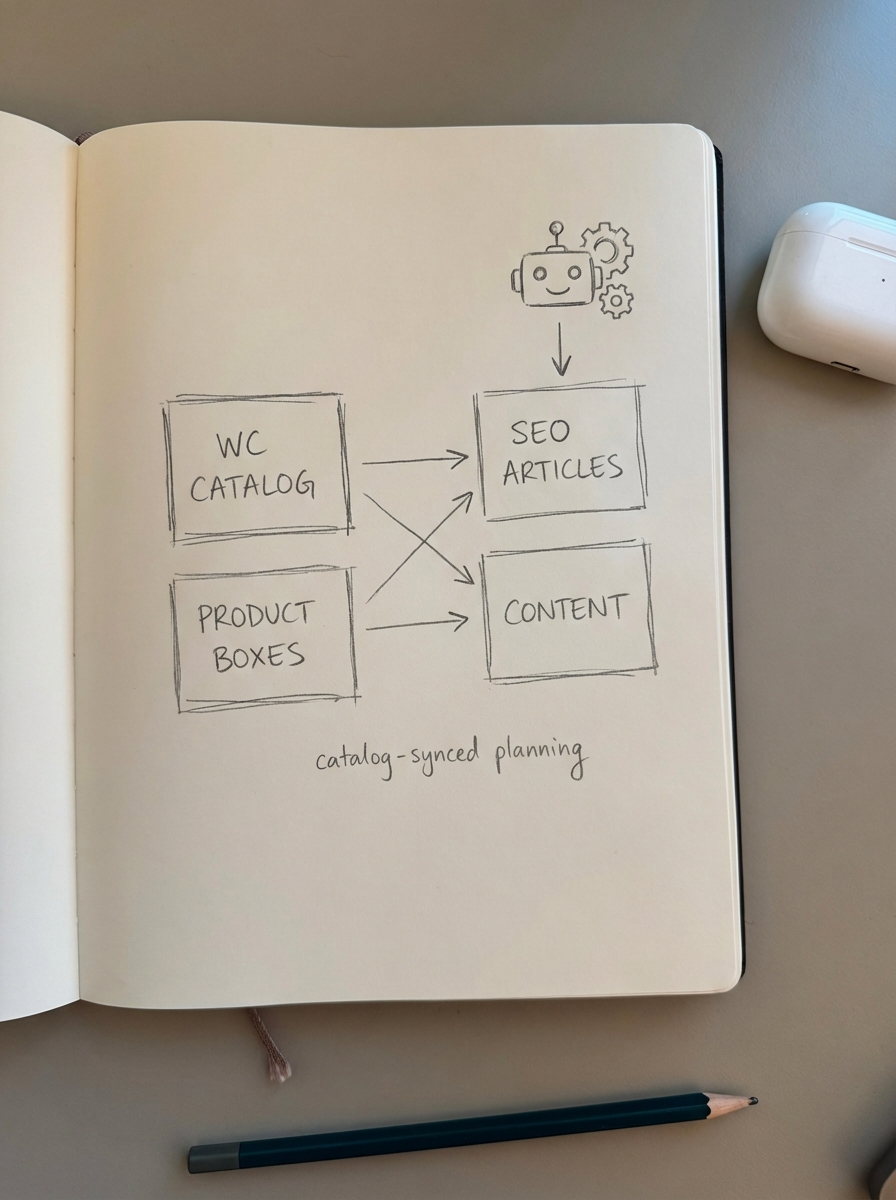
- Launch an MVP: We use AI to generate high-quality, fact-checked articles based on your product taxonomy mapping.
- Monitor Performance: We analyze conversion data in your SEO analysis to see which pages are actually driving trials or demos.
- Iterate and Improve: Once a page proves it can attract the right audience, we refine the content or add specific case studies to boost the conversion rate even further.
Prioritizing MRR over rankings
The ultimate KPI for SaaS SEO is not where you rank; it is the impact on your essential SEO KPIs like MRR and trial signups. A keyword that ranks first but brings in users with a high churn rate is less valuable than a keyword that ranks fifth but attracts high-LTV enterprise clients.
When performing a competitor keyword gap analysis, you should not just look at what they rank for organically. Look at the terms they are bidding on in paid search. If a competitor is consistently spending money on a term, it is a strong signal that the keyword converts. You should use that intelligence to create a superior organic cluster for that same intent.
By focusing on entity-based keyword research – targeting the specific concepts and relationships your customers care about – you build a competitive moat. This strategy focuses on the “meaning” behind search queries, ensuring your content remains relevant even as search engines evolve toward AI-driven results.
TL;DR
SaaS keyword research must prioritize trial and demo intent over raw search volume. Stop relying on third-party tools that underestimate niche B2B traffic and start using SERP-based clustering to map queries to specific product use cases. ContentGecko automates this by syncing your WooCommerce catalog with AI-driven content planning, allowing you to launch MVP content and iterate based on real conversion data. Focus on “jobs to be done” and pain points to drive measurable MRR growth.