
January 20, 2026
Content marketing formats for WooCommerce stores

Successful ecommerce content marketing is defined by how well your chosen formats move users from problem awareness to product purchase without wasting crawl budget on low-value pages. For WooCommerce merchants, the right mix isn’t about being everywhere; it is about identifying which formats bridge the gap between your product catalog and how people actually search.
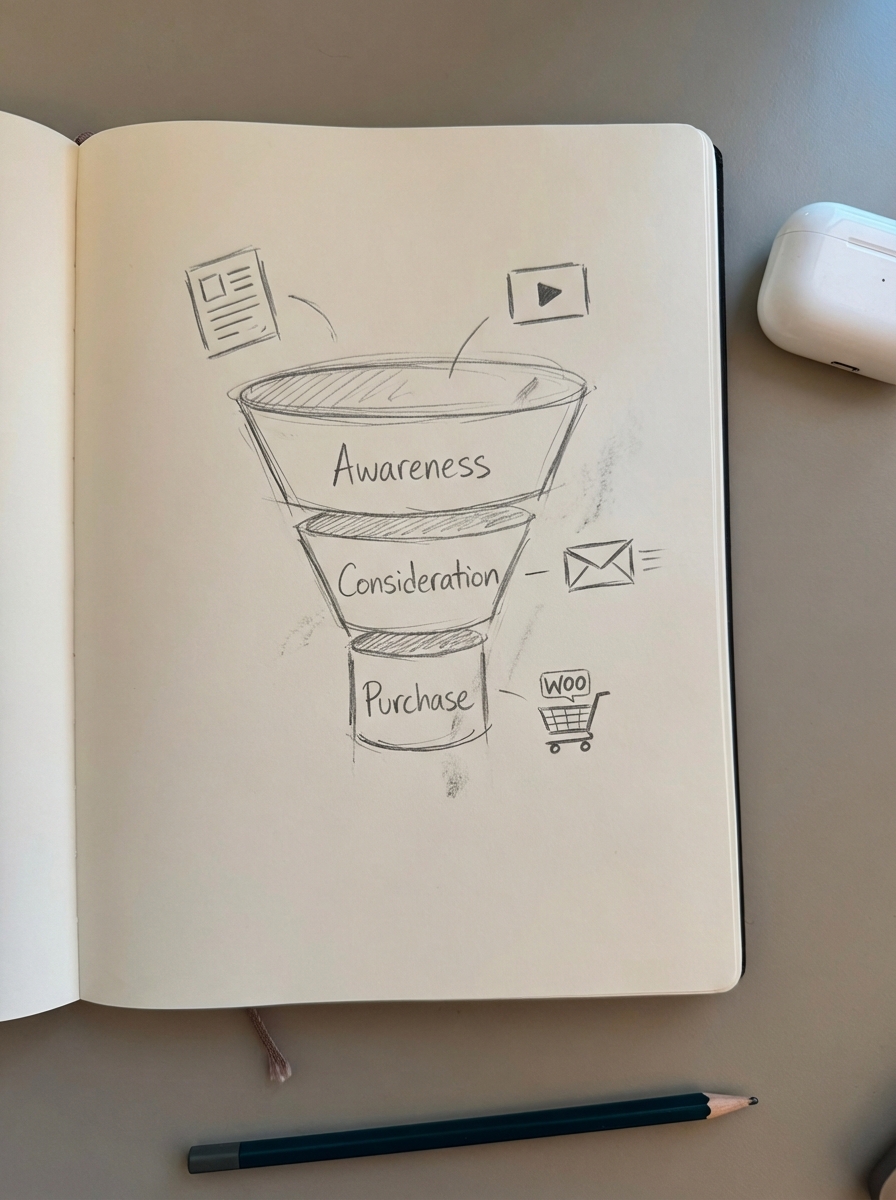
I have seen too many brands burn cash on thought leadership that earns zero clicks. In the ecommerce world, content only works if it serves a specific stage of the funnel or supports your WooCommerce topic clusters by building topical authority. We believe the first step in winning organic search is getting traditional SEO right so your content actually has a foundation to stand on.
Blogs and long-form articles
The blog is the most misunderstood asset in ecommerce. Most merchants treat it as a diary, but for SEO, it is your primary engine for capturing top-of-funnel traffic. Organic search is a massive driver of ecommerce discovery, and most consumers rely on blog recommendations to validate their purchasing decisions.
For a WooCommerce store, your blog should focus on high-converting formats that map directly to the buyer journey. I recommend prioritizing buying guides, such as “How to choose a cocktail dress” or “The best espresso machines for small kitchens,” which target users in the commercial investigation phase. How-to tutorials also perform well by solving a problem where your product is the solution. Comparison posts, like “Brand A vs. Brand B,” are high-intent assets that often move the needle on revenue faster than generic educational content.
We believe that the most common mistake is focusing purely on product pages. In reality, optimizing category pages often yields a higher ROI because they aggregate the authority of your entire catalog. Your blog content should always link back to these category hubs to pass authority and help Google understand your site structure.
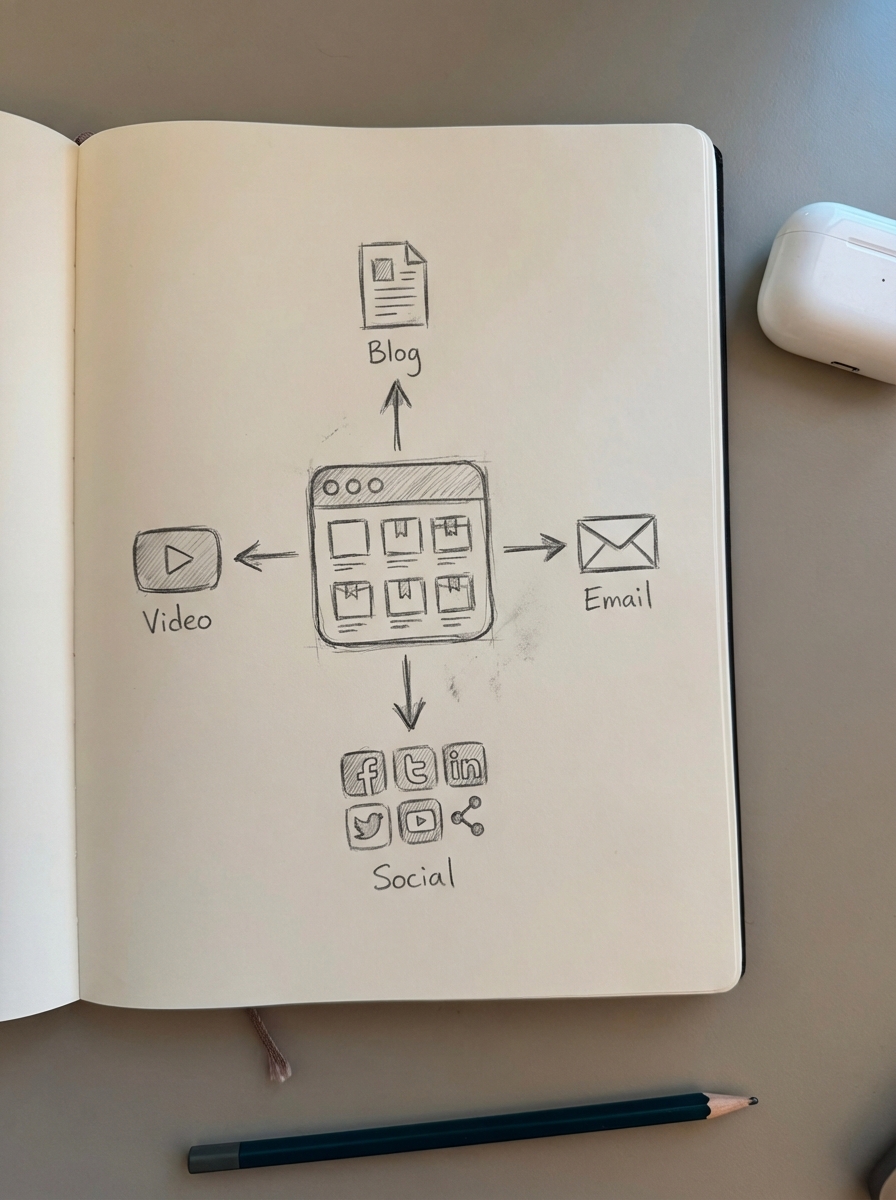
Short-form and long-form video
Video has moved from optional to essential, specifically for providing social proof and building trust. Buyers are increasingly looking for visual confirmation before they hit the buy button.
- Short-form video like Reels, TikToks, and Shorts should be used for unboxing, quick tips, or styling segments. These are discovery-first formats that thrive on high engagement.
- Long-form video on YouTube is where you host deep-dive tutorials or product reviews. Since YouTube functions as a massive search engine, it is a critical channel for capturing intent-based traffic.
- User-generated content (UGC) is particularly powerful here, as consumers often find UGC more effective and relatable than brand-created content.
If you are struggling with production volume, I recommend a content repurposing strategy. A single ten-minute YouTube video can be sliced into several short-form clips and summarized into a comprehensive blog post. This approach ensures you get maximum value out of every production hour.
Email marketing and lifecycle content
While SEO attracts new visitors, email is your retention and conversion workhorse. It allows you to own the relationship with your audience without worrying about algorithm changes.
Do not just send promotional blasts. Use content-driven emails to build authority and keep your brand top-of-mind. A welcome series should introduce your brand values and link to your best educational blog posts. Post-purchase education, such as an email on “How to care for your new leather boots,” reduces returns and increases lifetime value. You can even improve your abandoned cart sequences by including a link to a buyer’s guide to help the customer finalize their decision.
Social media and community-driven content
Social media formats should focus on engagement and shoppable experiences. However, you should not confuse social reach with SEO value. Social signals are not a direct ranking factor, but they do drive the brand awareness that leads to branded searches.
I suggest focusing on Instagram and Facebook Shops by directly syncing your WooCommerce catalog. You can also use polls and questions for content ideation. By asking your audience what specific problems they have, you can generate a list of blog topics that you know your customers actually care about.
How to prioritize your content mix
If you try to do everything at once, you will inevitably run into a content production bottleneck. I prioritize formats based on the growth stage of the store to ensure resources are used effectively.
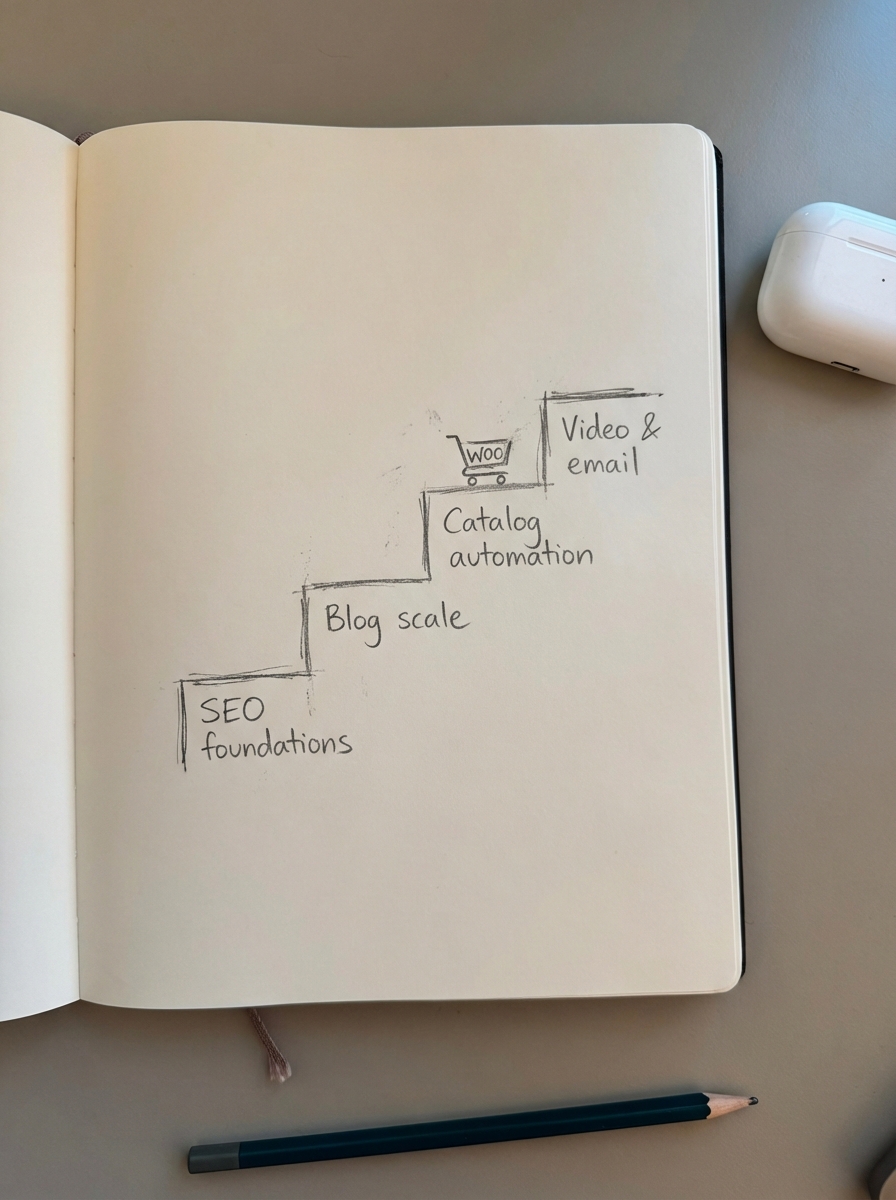
- Establish the foundation by focusing on your on-page SEO process for categories and key products.
- Scale your blog to capture more organic traffic. This is where most stores fail because manual writing is slow and expensive.
- Automate the production of catalog-aware content. We use the ContentGecko dashboard to sync with the product catalog so that when products go out of stock or prices change, the content stays accurate.
- Layer in video and email automation once you have a steady stream of organic traffic to support these higher-effort channels.
Remember, the goal of content is not just to exist – it is to rank and convert. If a piece of content does not have a clear path to a product or category page, rethink why you are creating it. I suggest using a free SERP keyword clustering tool to ensure your articles are organized correctly and are not competing with each other for the same search intent.
TL;DR
- Blogs are the engine for SEO and top-funnel traffic; prioritize buying guides and how-to content.
- Video works best for social proof; repurpose long-form videos into short-form clips to save time.
- Email is for retention; move beyond promotion blasts to educational lifecycle content that builds trust.
- Prioritize category pages and high-intent blog clusters before moving to social media and video.
- Use automated SEO content writers to handle high-volume writing tasks so you can focus on high-level strategy.